Vehicle Went Over the I-405 Guardrail in Sherman Oaks: Evidence to Save After a Freeway Rescue
After LAFD extricated and transported one person from a vehicle beyond the northbound I-405 guardrail in Sherman Oaks, the legal questions turn on medical records, vehicle data, roadway conditions, and evidence that can disappear quickly.
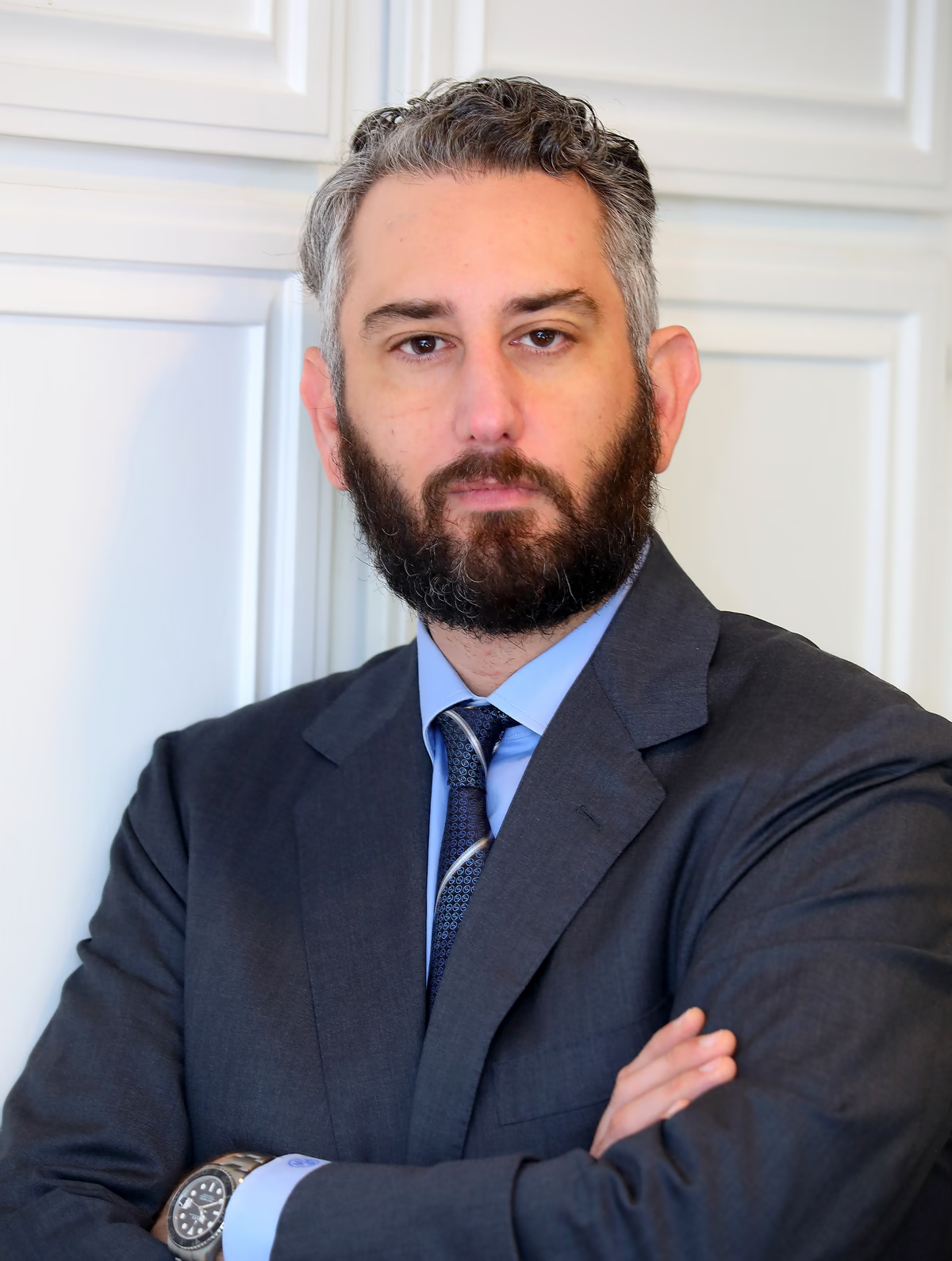
CA Bar #286995 · Admitted 2013
A vehicle going over the side of a freeway is not a routine fender-bender. The rescue may end in minutes, but questions about the vehicle, roadway, guardrail, witnesses, medical care, and insurance can last much longer.
On July 11, 2026, the Los Angeles Fire Department reported a physical rescue on the northbound I-405 in Sherman Oaks. According to LAFD incident INC#0574, firefighters responded at approximately 9:56 a.m. after a traffic accident left a vehicle beyond the guardrail. One person was trapped, extricated, and transported to a hospital by paramedics.
The LAFD alert did not state what caused the crash, identify another vehicle, describe the person's injuries, or assign responsibility. Public emergency information can also change as agencies complete their work.
This article explains what injured people and families should preserve after a serious freeway rescue. It is general information, not legal advice.
Why a vehicle-over-the-side crash requires a broader investigation
A crash like this can involve more than the final point where the vehicle stopped. A careful investigation may need to examine:
- whether another vehicle made contact or forced an evasive maneuver;
- lane changes, merging traffic, speed, visibility, and road debris;
- guardrail condition, impact marks, maintenance, and prior damage;
- tire, brake, steering, or other vehicle issues;
- dashcam, phone, navigation, and event-data-recorder information;
- construction, traffic-control devices, signage, and lighting;
- witness observations and nearby camera locations.
Those are investigation questions, not conclusions. The LAFD alert alone does not establish why the vehicle left the roadway.
Save the official incident details
Write down the agency, incident number, date, time, direction of travel, and general location. For this incident, that includes:
- LAFD incident
INC#0574; - July 11, 2026, at approximately 9:56 a.m.;
- northbound I-405;
- Sherman Oaks;
- one person extricated and transported, according to LAFD.
Also keep any CHP or police report number, tow-yard information, ambulance paperwork, hospital discharge documents, and insurance claim numbers. Different agencies may hold different pieces of the record.
Preserve vehicle and digital evidence
Before the vehicle is repaired, sold, released, or destroyed, preserve:
- photos of every side of the vehicle, including the undercarriage if safely available;
- tire condition, wheel damage, steering components, airbags, and seat belts;
- dashcam video and memory cards;
- navigation history and trip information;
- event-data-recorder information where available;
- repair, inspection, and maintenance records;
- tow-yard notices and storage deadlines.
Do not alter or test damaged components yourself. Photograph them and ask qualified counsel or an appropriate investigator about preservation.
Document the roadway and guardrail
Freeway conditions can change quickly. If someone can safely return without entering traffic or a restricted area, useful records may include photographs from a lawful vantage point showing:
- guardrail damage or prior repairs;
- tire marks, debris, gouges, or impact points;
- lane configuration and merge areas;
- construction signs or barriers;
- lighting and visibility;
- nearby businesses, freeway cameras, or traffic cameras.
Safety comes first. Never walk onto a freeway or place yourself in traffic to gather evidence.
Build the medical timeline
Extrication and hospital transport are important parts of the record, but they may not be the entire medical story. Save:
- ambulance and emergency-room records;
- imaging orders and results;
- discharge instructions;
- referrals and follow-up appointments;
- prescriptions and medical equipment;
- work restrictions and missed-work documentation;
- notes describing changes in pain, dizziness, headaches, mobility, sleep, or daily function.
If symptoms change after discharge, tell the medical provider what changed and when. A contemporaneous medical record is more useful than trying to reconstruct the timeline later.
Be careful with early insurance requests
An adjuster may ask for a recorded statement, broad medical authorization, vehicle release, or settlement paperwork before the full evidence is available. Be truthful, but do not guess about speed, distance, fault, diagnosis, or future recovery.
Before signing anything, ask what it covers, whether it authorizes access to unrelated medical history, whether it releases all claims, and whether the damaged vehicle or its data will still be preserved.
Sources
- Los Angeles Fire Department Alerts: Physical Rescue, July 11, 2026, INC#0574
- California Highway Patrol: Traffic and crash-report information
- California DMV: Report of Traffic Accident Occurring in California, SR-1
Talk to Law Office of Arta Wildeboer
If you or a family member was injured in a serious freeway crash in Sherman Oaks, Downey, Southeast Los Angeles, the Gateway Cities, or elsewhere in Los Angeles County, Law Office of Arta Wildeboer can help you understand what evidence should be preserved before the vehicle, digital data, roadway conditions, and insurance record change.
Call Law Office of Arta Wildeboer for a free consultation.
Attorney Advertising. This article is for general informational purposes only and does not constitute legal advice. Reading this content does not create an attorney-client relationship. Laws change frequently — consult a qualified attorney about your specific situation.