Can Social Media Hurt a California Injury Claim? What to Preserve
Social media can create misleading snapshots after an accident. Learn why injured Californians should preserve existing content and avoid impulsive deletion.
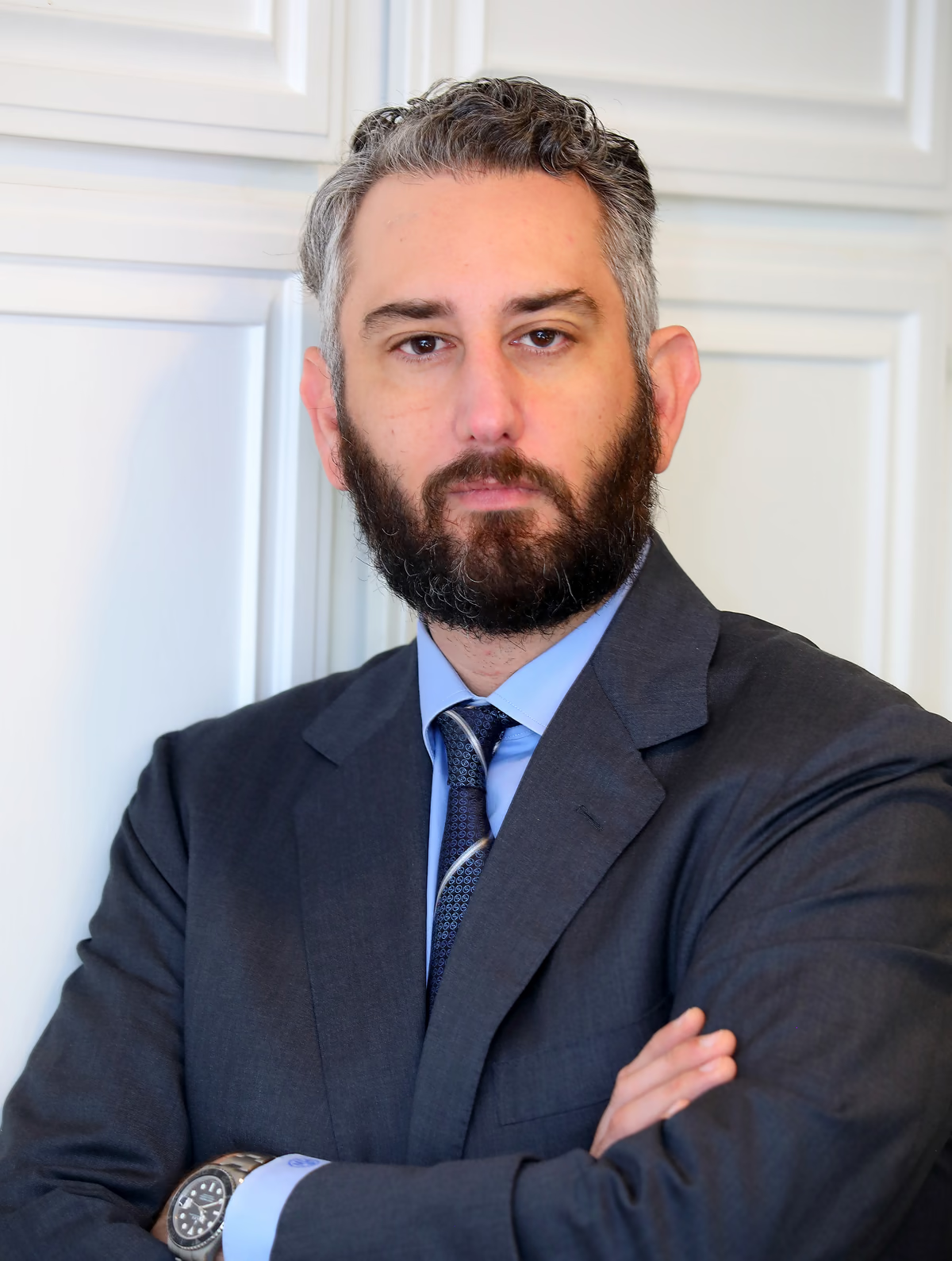
CA Bar #286995 · Admitted 2013
After a California crash, fall, dog attack, fire, or other injury, posting online can feel ordinary. Family members ask for updates. Friends want to know whether you are okay. A photo from dinner, a short video, a location tag, or a joke about a difficult week may seem unrelated to the claim.
An insurer, defense lawyer, or opposing party may read it differently.
A social-media post rarely tells the whole story. A smiling photograph does not measure pain. Attending one family event does not establish an ability to work a full shift. An old image can be mistaken for a new one. A short caption can lose the context of medication, rest, physical limitations, or what happened before and after the photo.
The practical response is not panic, dishonesty, or mass deletion. It is to preserve what already exists, avoid creating misleading new material, and get case-specific guidance before changing accounts or responding to formal requests.
Important: This article provides general information, not legal advice. The relevance and discoverability of social-media content depend on the claims, defenses, account, post, privacy setting, procedural posture, and court orders in the specific case. Do not destroy, alter, conceal, or fabricate evidence.
Public, private, and privileged are different concepts
A public post can be viewed by anyone who can access the page. A private account may restrict ordinary viewing to approved followers. Neither setting answers every legal question.
Privacy settings do not automatically make relevant content legally privileged. If litigation begins, California's Civil Discovery Act generally allows discovery of nonprivileged matters relevant to the pending action or a claim or defense. The statute expressly includes electronically stored information.
That does not mean an opposing party automatically receives an injured person's entire digital life. Relevance, scope, burden, privacy, privilege, objections, protective orders, and the wording of an actual request can matter. A demand should be evaluated as written, not reduced to “private means protected” or “they can have everything.”
Why social media may become relevant
An injury claim may put certain facts at issue, such as:
- how the incident occurred;
- when symptoms began;
- what body parts were affected;
- physical activity before and after the incident;
- work ability and restrictions;
- missed events or changes in daily life;
- emotional-distress allegations;
- travel, sports, exercise, hobbies, or recreation;
- prior similar symptoms or injuries;
- statements about the driver, property owner, business, product, witness, or insurer;
- the timeline of treatment, recovery, or claimed loss.
A post does not decide those issues by itself. It can, however, become one item in a larger record that includes medical notes, testimony, photographs, work records, location history, and witness accounts.
Do not assume deleting posts fixes the problem
Deleting a post can remove it from ordinary public view without eliminating screenshots, platform records, cached copies, messages, shares, downloads, or copies held by another person.
More importantly, deleting or changing potentially relevant content after an incident or claim can create a separate preservation dispute. The same concern can apply to:
- deleting captions or comments;
- editing dates or descriptions;
- removing photographs from an album;
- unsending messages;
- deleting an account;
- asking a friend to remove a tag or comment;
- changing a post to make it look older or unrelated;
- creating a second account to move ongoing activity out of view.
Do not perform a midnight account purge because someone said insurance companies check Instagram. Preserve first. Ask for legal guidance before deleting, editing, deactivating, or materially changing relevant content.
Preserve the account as it exists
Screenshots can be useful, but they may omit dates, comments, links, audience settings, metadata, or surrounding context.
When appropriate and lawful, preservation may include:
- downloading an account archive through the platform's own tools;
- saving original photographs and videos;
- preserving captions, comments, reactions, and visible dates;
- recording the account name and profile URL;
- noting whether a post was public, private, temporary, or limited to a group;
- preserving direct messages relevant to the incident or claim;
- keeping the original device and cloud copies;
- documenting posts in which someone else tagged or mentioned you;
- keeping a list of accounts used before and after the incident.
Do not alter files, metadata, timestamps, or exports. Store a copy safely and keep the original account credentials private. A preservation copy is not an invitation to email your entire archive to strangers, adjusters, or anyone who asks informally.
Think before posting new details about the incident
A public timeline is a bad place to investigate fault, diagnose an injury, estimate damages, or argue with an insurance company.
Avoid posting:
- guesses about speed, distance, timing, or who caused the incident;
- apologies or admissions made to calm an argument;
- photographs of police reports, claim forms, medical records, prescriptions, bills, or settlement papers;
- private information about witnesses or other injured people;
- descriptions of lawyer communications or legal strategy;
- complaints that exaggerate or minimize symptoms;
- updates saying you are “fine,” “fully recovered,” or “back to normal” when the medical picture is unresolved;
- accusations of fraud, lying, negligence, intoxication, or evidence destruction that have not been established;
- settlement amounts, offers, or negotiation details;
- requests for friends to coordinate stories or remove evidence.
Be truthful in every setting. The safest social-media statement is often no detailed statement at all while the facts and medical condition are still developing.
Ordinary life can still be taken out of context
An injured person may attend a birthday, smile for a photograph, walk into a restaurant, take a short trip, or have one better afternoon. None of that automatically shows the absence of injury.
But a photograph may not show:
- medication taken beforehand;
- assistance needed to get there;
- how long the person stayed;
- activities avoided;
- pain during the event;
- symptoms afterward;
- whether the photograph was old;
- whether the person attempted an activity and could not finish it.
Do not stage limitations for a claim, and do not post activity to prove toughness. Follow medical advice, live honestly, and keep the medical and daily-life record accurate.
If an existing post is misleading without context, do not secretly rewrite it. Preserve the original and discuss how to address it accurately.
Watch tags, comments, and posts made by other people
Friends and relatives can create content involving you even when you stop posting.
They may:
- tag you in a photograph or location;
- post an old image as a memory;
- describe your condition inaccurately;
- make jokes about the accident;
- check you into an event;
- comment on what you can or cannot do;
- share private messages or photographs;
- identify treatment, work absence, or travel.
Do not instruct people to lie, change dates, or destroy content. You can ask family and friends not to post new information about your medical condition, location, claim, or communications. If relevant content already exists, preserve it and discuss it with counsel before seeking changes.
Direct messages and closed groups are not automatically outside the case
A direct message, private story, group post, or restricted account is not necessarily privileged simply because fewer people can see it.
Messages may contain:
- a description of how the incident happened;
- photographs or video;
- witness identities;
- symptom reports;
- work or activity updates;
- statements about prior injuries;
- communications with the driver, property owner, business, or insurer.
Whether a particular message must be produced is a legal and procedural question. Do not forward, delete, or selectively edit a message chain to improve appearances.
Communications with your lawyer may involve privilege, but posting legal advice in a group chat or forwarding it to other people can create separate questions. Keep attorney communications private and ask before sharing them.
Be cautious with unfamiliar friend and follower requests
After a public incident or claim, unfamiliar accounts may follow, message, or request access.
Do not assume the account belongs to an adjuster or investigator, but do not assume it is harmless either. Avoid:
- accepting unknown requests merely to identify the person;
- arguing with suspicious accounts;
- sending claim documents or medical information;
- clicking unexpected links;
- providing passwords, verification codes, or account exports;
- posting a warning that reveals your legal strategy.
Save the request or message if it appears connected to the incident. Use the platform's security tools and report impersonation or threats when appropriate.
If you already posted, do not panic
Many people post before realizing the content may matter. A bad reaction is to erase everything and hope nobody saw it.
Instead:
- preserve the post as it appeared;
- save the date, caption, comments, reactions, and audience setting;
- keep the original photo or video;
- identify whether it was shared, reposted, or quoted elsewhere;
- write down the truthful context;
- do not ask anyone to change a statement;
- tell your lawyer what exists;
- respond truthfully to lawful discovery and court orders with legal guidance.
A lawyer cannot evaluate a post that the client hides. Surprises are usually more manageable in a private consultation than during a deposition.
Build a private injury record instead of a public narrative
Social media is not a substitute for medical records, an incident report, a claim file, or a careful chronology.
Keep a private record of:
- incident date, time, location, and mechanism;
- symptoms and changes over time;
- medical visits, imaging, treatment, referrals, and medications;
- work restrictions and missed time;
- expenses and receipts;
- photographs of injuries or damaged property;
- communications from insurers and businesses;
- witness information;
- account-preservation steps;
- questions for your lawyer.
Even a private journal may raise discovery questions depending on its purpose, contents, and use. Do not label something “privileged” and assume that makes it so. Ask for guidance about how to maintain a useful record.
Social-media checklist after a California injury
- Pause before creating new accident or medical posts.
- Do not delete, alter, backdate, or conceal potentially relevant content.
- Preserve existing posts, messages, comments, tags, and original files.
- Review privacy and security settings without assuming they erase earlier access or legal obligations.
- Avoid unknown friend, follower, and message requests.
- Ask family and friends not to publish new private updates.
- Keep legal communications out of posts and group chats.
- Do not post reports, medical documents, bills, or settlement papers.
- Maintain accurate medical, work, expense, and incident records offline.
- Tell your lawyer about relevant content, including posts you think look bad.
- Evaluate any formal request by its actual language and deadline.
- Follow court orders and provide truthful information.
Sources
- California Code of Civil Procedure section 2017.010
- California Code of Civil Procedure section 2031.010
Talk to Law Office of Arta Wildeboer
If social-media posts, photographs, messages, tags, or account records may affect a California injury claim, preserve the existing material and get advice before making significant changes or responding to a broad request. Law Office of Arta Wildeboer provides personal injury representation throughout Los Angeles County and can help evaluate the claim record, insurer communications, and evidence-preservation questions.
Call Law Office of Arta Wildeboer for a free consultation.
Attorney Advertising. This article is for general informational purposes only and does not constitute legal advice. Reading this content does not create an attorney-client relationship. Laws change frequently — consult a qualified attorney about your specific situation.