Wrongful Death vs. Survival Claims in California
Learn how California wrongful-death and survival claims differ, who may bring them, what losses they address, and which family records matter.
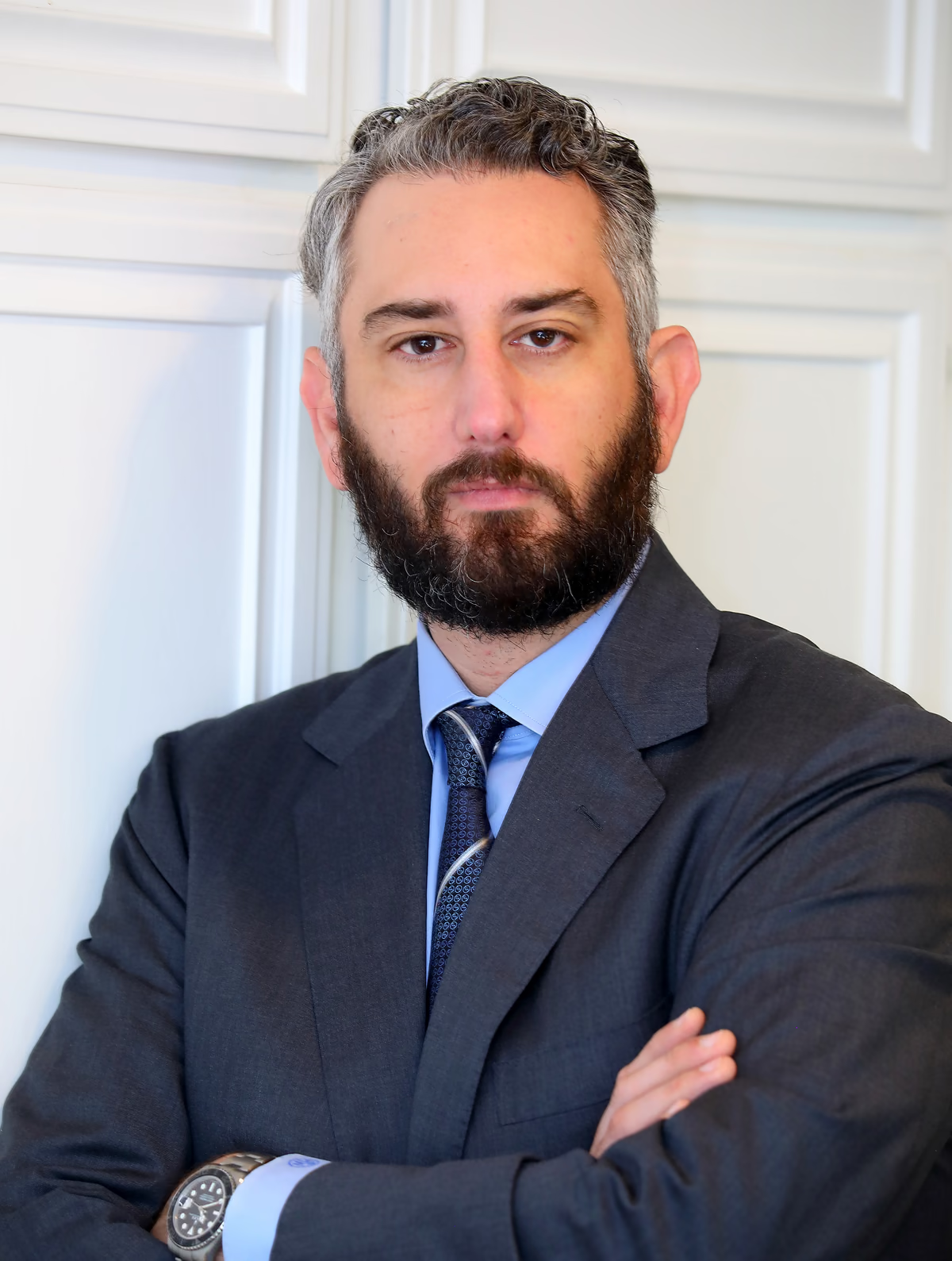
CA Bar #286995 · Admitted 2013
After a preventable death, a family may hear two legal phrases that sound interchangeable: wrongful-death claim and survival claim. They are not the same claim.
A wrongful-death claim generally concerns losses suffered by people California law authorizes to sue because of the death. A survival claim concerns a legal claim the person who died could have pursued if they had lived. The two claims may arise from the same incident, but they protect different legal interests and may involve different authorized plaintiffs.
That distinction can affect who must participate, which records matter, what damages may be considered, and how the case is filed. It should be sorted out early, without forcing a grieving family to become its own probate and civil-procedure department.
For a shorter records checklist, use the Injury Help guide Records to Save After a Fatal Accident.
Important: This article provides general California legal information, not individualized legal advice. Standing, deadlines, damages, probate issues, and filing requirements depend on the facts and current law.
The Short Version: Two Claims, Two Different Harms
A wrongful-death claim focuses on the family’s loss
California Code of Civil Procedure section 377.60 authorizes specified people to bring a claim when a person’s death was caused by another person’s wrongful act or neglect. The claim addresses the legally recognized losses resulting from the death.
Depending on the evidence and applicable law, those losses may include financial support, household services, and the loss of love, companionship, comfort, care, assistance, protection, affection, society, and moral support. Funeral and burial expenses may also be relevant when a claimant paid them.
The claim does not simply belong to anyone who loved the person who died. California’s standing rules determine who is legally authorized to assert it.
A survival claim focuses on the decedent’s existing claim
A survival claim is not a new claim created for the family. Under Code of Civil Procedure section 377.30, a cause of action that survives the person’s death passes to the decedent’s successor in interest and may be brought by the personal representative or, if there is none, by the successor in interest.
In plain English: if the person had a legal claim before death, that claim may continue after death through the legally authorized representative or successor.
For example, if someone was injured in a crash, received emergency treatment, lost property, or incurred other legally recoverable losses before dying from the injuries, a survival claim may address parts of the claim that belonged to that person before death. Whether a particular claim survives and what it includes require case-specific analysis.
Who May Bring a California Wrongful-Death Claim?
Section 377.60 identifies the people who may have standing. The list includes, among others:
- the surviving spouse or registered domestic partner;
- children and the issue of deceased children;
- when there is no surviving issue, people who would inherit through California intestate succession;
- certain people who depended on the decedent, including a putative spouse, children of a putative spouse, stepchildren, or parents, if the statute’s requirements are met; and
- certain dependent minors who lived in the decedent’s household for the required period.
This is a summary, not the complete statutory test. Marriage, parentage, adoption, dependency, domestic-partnership status, and intestate succession can become disputed or document-heavy. A will does not necessarily decide who has wrongful-death standing, because standing comes from the statute rather than simply from who receives estate property.
A personal representative may assert the wrongful-death action on behalf of the people entitled to bring it. That does not transform the family’s wrongful-death claim into the decedent’s survival claim.
Although each eligible heir has a personal interest, California ordinarily requires the wrongful-death heirs to participate in one joint action rather than bring successive lawsuits. An omitted or unknown heir can create procedural complications, which is another reason to identify everyone who may have standing early.
Who May Bring a Survival Claim?
Section 377.30 allows the decedent’s personal representative to commence the surviving action. If there is no personal representative, the decedent’s successor in interest may be able to do so.
A successor in interest is not established by saying, “I am the closest relative.” Code of Civil Procedure section 377.32 requires a person proceeding as successor in interest to file a declaration or affidavit containing specified facts. The filing includes information about the death, estate administration, the right to act, and whether anyone has a superior right. A certified copy of the death certificate must be attached.
Questions to identify early include:
- Has a probate case been opened?
- Has a personal representative been appointed?
- Is there a will or trust?
- Who may be the successor in interest under California law?
- Is an existing lawsuit already pending?
- Are several relatives or representatives asserting different roles?
Not every survival claim requires the same probate path. The correct plaintiff and paperwork depend on the estate and procedural facts.
What Damages Can the Two Claims Address?
The cleanest way to understand the distinction is to ask: whose loss is this?
Wrongful-death damages
Code of Civil Procedure section 377.61 permits damages that are just under the circumstances but excludes damages recoverable through the survival statute. California’s civil jury instructions separate financial and nonfinancial wrongful-death losses.
Depending on the evidence, a wrongful-death claim may examine:
- financial support the decedent would have contributed;
- loss of gifts or benefits the claimants reasonably expected;
- funeral and burial expenses paid by a claimant;
- the reasonable value of household services; and
- loss of the decedent’s love, companionship, comfort, care, assistance, protection, affection, society, and moral support.
These are not automatic line items. Each claimed loss must fit the law and be supported by evidence. California’s jury instructions also make clear that a wrongful-death award does not compensate a claimant for grief, sorrow, or mental anguish as such.
Survival damages
Under the current text of Code of Civil Procedure section 377.34, survival damages generally concern loss or damage the decedent sustained before death. The statute also addresses penalties and punitive or exemplary damages the decedent could have pursued if they had lived.
The statute ordinarily excludes damages for the decedent’s pain, suffering, or disfigurement. A temporary exception covered qualifying actions filed on or after January 1, 2022, and before January 1, 2026, as well as a narrow category of actions granted preference under Code of Civil Procedure section 36 before January 1, 2022. Because procedural history matters, families should not rely on older articles that describe the temporary rule as if it still applies to every new case.
Possible survival-claim records may include:
- emergency and hospital records from before death;
- medical bills and health-insurance statements;
- records of income or property loss incurred before death;
- damaged-property records;
- contracts, account statements, or receipts tied to the decedent’s existing claim; and
- evidence relevant to punitive damages when the facts and law support that issue.
Not every fatal-incident case includes meaningful pre-death damages, and punitive damages are never automatic.
One Incident Can Require Both Analyses
Suppose a person is seriously injured in a collision, receives hospital treatment, and later dies from those injuries. Depending on the facts:
- a wrongful-death claim may address qualifying family members’ legally recognized losses caused by the death; and
- a survival claim may address parts of the injured person’s own claim that survived the death.
The claims may be handled in the same civil action, but they remain legally distinct. They may involve different plaintiffs, different evidence, and different damages.
The investigation must still prove the underlying case. Neither label establishes negligence, causation, insurance coverage, or damages. The evidence may need to show what happened, who was legally responsible, whether the incident caused the death, and which losses belong to which claim.
Records Families Should Preserve
A family does not need to organize every document in the first week. It does help to keep irreplaceable records from disappearing and to choose one trusted person to maintain a shared file.
Family and authority records
Save copies of:
- the certified death certificate when available;
- marriage or registered-domestic-partnership records;
- birth, adoption, or parentage records;
- documents relevant to dependency or household residence;
- the will, trust, and any amendments;
- probate filings, letters of administration, or appointment documents; and
- communications identifying who is handling the estate.
Incident and causation records
Preserve:
- police, CHP, fire, coroner, workplace, property, or product incident information;
- original photos, videos, dashcam files, and device data;
- witness names and contact information;
- vehicle, property, product, maintenance, or inspection records;
- tow and storage details;
- available camera locations and the time window that may matter; and
- medical records connecting the incident, treatment, and death.
Do not edit original files, guess at missing facts, trespass, or tell a possible evidence holder what the video “must” show. Some recordings and electronic records are overwritten quickly, so a focused preservation request may need prompt attention.
Financial and household records
Depending on the claims being evaluated, preserve:
- recent pay records, tax returns, benefits information, and pension records;
- records showing household services, caregiving, or regular financial support;
- medical, funeral, burial, and memorial invoices and receipts;
- insurance policies and claim correspondence;
- bills or losses incurred before death; and
- a factual timeline of major expenses and changes in household responsibilities.
Keep originals. Avoid writing argumentative notes on source documents.
Deadlines Can Differ
Code of Civil Procedure section 335.1 provides a general two-year limitations period for an action involving injury to or death of a person caused by another’s wrongful act or neglect. That general rule does not answer every deadline question.
A survival claim generally remains subject to the limitations period governing the decedent’s underlying claim. The death does not necessarily start a fresh two-year period.
Different or shorter procedures may apply when:
- a city, county, transit agency, school district, or other public entity may be involved;
- the matter concerns medical negligence;
- federal law applies;
- the defendant or responsible party is difficult to identify;
- the decedent had already filed a lawsuit;
- an estate or successor must be identified; or
- another tolling, accrual, or statutory rule applies.
An insurance deadline, government-claim deadline, probate filing, and civil statute of limitations are not interchangeable. Families should get situation-specific advice promptly rather than treating the general two-year statute as a safe date to wait for.
Common Questions
Can a family bring both wrongful-death and survival claims?
Potentially. The same incident may support both analyses, but the claims belong to different legal interests and address different losses. The proper plaintiffs, causes of action, and damages depend on the facts.
Does a will decide who can bring the wrongful-death claim?
Not by itself. California Code of Civil Procedure section 377.60 controls wrongful-death standing. A will or trust may matter to estate and successor questions, but it does not replace the statutory standing analysis.
Is a survival claim the same thing as inheriting from the estate?
No. A survival claim is a civil cause of action that belonged to the decedent and continued after death. Estate succession and the authority to pursue that action are related procedural questions, but they are not the same thing as a wrongful-death claim or a general inheritance.
Does every fatal accident create a wrongful-death case?
No. The claimant must still establish a legally supported basis for responsibility, causation, standing, and damages. A death alone does not establish that another person or company is legally responsible.
Is the deadline always two years from the death?
No. Section 335.1 supplies an important general rule, but claim-presentation requirements, different statutes, accrual questions, pending litigation, and other exceptions can change the analysis. A family should not calculate the deadline from a general article alone.
Official Sources
- California Code of Civil Procedure section 377.20: Survival of causes of action
- California Code of Civil Procedure section 377.60: Who may assert a wrongful-death claim
- California Code of Civil Procedure section 377.30: Who may bring a surviving cause of action
- California Code of Civil Procedure section 377.32: Successor-in-interest declaration
- California Code of Civil Procedure section 377.34: Survival damages
- California Code of Civil Procedure section 377.61: Wrongful-death damages
- California Code of Civil Procedure section 335.1: General two-year limitations period
- Judicial Council of California: 2026 Civil Jury Instructions
Bottom Line
A California wrongful-death claim and survival claim may come from the same fatal incident, but they do different work. The wrongful-death claim focuses on the legally recognized losses of qualifying claimants. The survival claim continues a cause of action that belonged to the person who died.
Sorting out standing, estate authority, pre-death losses, family losses, evidence, and deadlines early can prevent avoidable disputes later. Law Office of Arta Wildeboer helps families in Downey, Southeast Los Angeles, the Gateway Cities, Los Angeles County, and throughout Southern California evaluate fatal-accident evidence and California wrongful-death questions.
Learn about the firm’s California personal-injury services, contact Law Office of Arta Wildeboer online, or call (562) 608-8887 for a free consultation about your family’s situation.
Past results do not promise any outcome. This article is general information, not legal advice. Contacting the firm does not create an attorney-client relationship unless a written agreement is signed.
Attorney Advertising. This article is for general informational purposes only and does not constitute legal advice. Reading this content does not create an attorney-client relationship. Laws change frequently — consult a qualified attorney about your specific situation.