California Left-Turn Motorcycle Crashes: Who Yields?
When a driver turns left across a motorcycle's path in California, who must yield? Learn how speed, signals, sightlines, and evidence can affect fault.
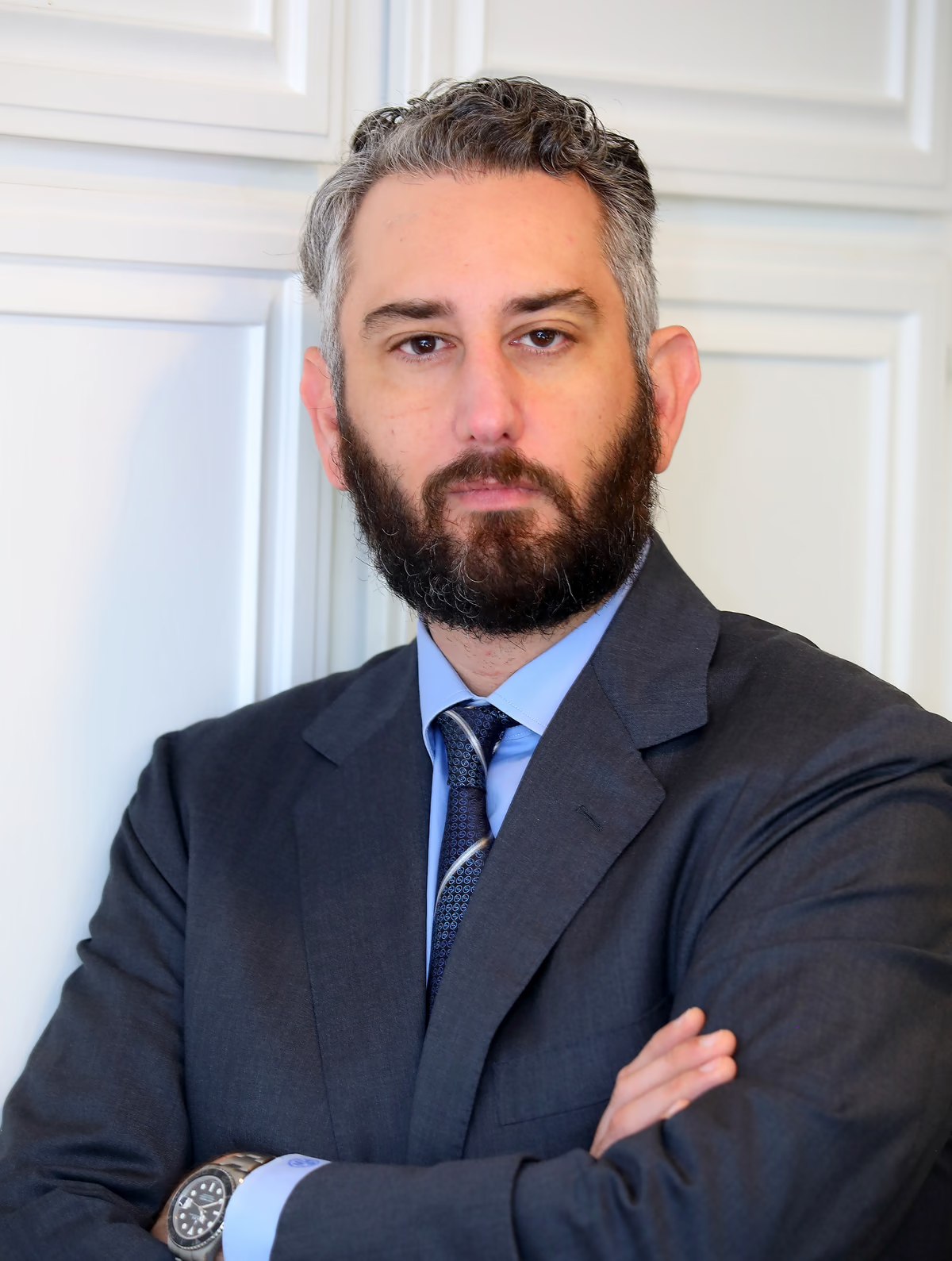
CA Bar #286995 · Admitted 2013
When a driver turns left across a motorcycle's path, people often assume the turning driver is automatically at fault. California's rule is more specific. Vehicle Code section 21801 generally requires a driver turning left to yield to oncoming traffic that is close enough to create a hazard and to keep yielding until the turn can be made safely.
The rule also works in the other direction. After the turning driver has yielded and signaled as required, an approaching rider must yield to the turning vehicle. That is why the turn itself—or even a citation or possible traffic-law violation—does not automatically decide civil fault, causation, comparative responsibility, or damages.
Important: This article provides general information, not individualized legal or insurance advice. Responsibility, causation, coverage, deadlines, and damages depend on the facts, evidence, policies, and current law. No outcome or payment is promised.
California's Left-Turn Rule Is Conditional
Vehicle Code section 21801(a) applies when a driver intends to turn left or complete a U-turn on a highway, or turn left into public or private property or an alley. The driver must yield to vehicles approaching from the opposite direction that are close enough to constitute a hazard at any time during the turning movement, and must continue yielding until the left turn or U-turn can be made with reasonable safety.
The statute does not create a universal number of feet or seconds that defines a hazard. The answer can depend on the vehicles' locations and movements, the posted limit and available evidence of actual speed, lanes, sightlines, traffic, lighting, signals, and the time available to perceive and respond. Those facts must be established rather than supplied by a formula.
Subdivision (b) supplies the reciprocal rule. A driver who has first yielded as subdivision (a) requires and signaled when and as required may turn left or complete a U-turn; drivers approaching the intersection or the property or alley entrance from the opposite direction must then yield to the turning vehicle. Right of way is not permanent ownership of the road. It allocates duties as traffic develops.
Section 22107 requires reasonable safety before a roadway turn or lateral movement and a signal when another vehicle may be affected. Section 22108 generally requires signaling during the last 100 feet before a turn. A signal alone does not authorize an unsafe turn or resolve civil fault.
A Left Turn Does Not Make Fault Automatic
A useful investigation separates five questions:
- What traffic rule applied?
- What did each person do?
- Did that conduct help cause the crash or injury?
- Did more than one person share responsibility?
- What injuries and losses do the records support?
California generally requires people to use reasonable care. Evidence Code section 669 may create a rebuttable presumption that a person failed to exercise due care only when all four statutory conditions are proved: a violation; proximate causation; an occurrence of the kind the rule was designed to prevent; and injury to a person within the protected class. That presumption is not a final finding of liability, may be rebutted, and does not eliminate separate questions about causation, damages, defenses, or comparative responsibility.
The investigation may consider rider speed, but an allegation does not prove it or erase another driver's duty. Section 22350 prohibits speeds that are unreasonable or imprudent for the conditions or that endanger people or property. Posted speed, traffic, visibility, roadway conditions, video, physical evidence, and reliable observations may be relevant.
Lane position, conspicuity, headlight evidence, clothing, surrounding traffic, braking, and the opportunity each person had to perceive and respond may also matter. None creates automatic fault. A motorcycle's smaller profile is not permission to overlook it, and visibility should be tested against the actual scene. If lane splitting is genuinely raised by the evidence, examine the actual traffic, speed, lane position, visibility, and driver movements rather than treating the label as proof of fault.
First Identify the Type of Left-Turn Conflict
“Left-turn crash” can describe different traffic movements. Identifying the exact variant keeps the wrong rule from being applied.
- Uncontrolled or permissive turn: Section 21801's conditional yield duties may be central, but the approach, hazard, and timing still must be proved.
- Protected-arrow or signal dispute: A circular green permits straight, right, left, and—unless prohibited by a sign—U-turn movement, but any driver, including one turning, must yield to traffic and pedestrians lawfully within the intersection or adjacent crosswalk. A green arrow permits only the indicated movement or another movement separately permitted by a simultaneous indication, subject to the same statutory yielding requirements. After stopping at a steady circular red, and unless a sign prohibits the turn, a driver may turn right or may turn left only from a one-way street onto a one-way street, after yielding as required until the movement can be made with reasonable safety. A steady red arrow prohibits entering to make the indicated movement until a permitting signal appears. The evidence must establish which indication governed each lane.
- Turn into property: A vehicle already on the roadway may turn left across opposing traffic into property. That differs from entering the highway from property.
- Entry from property or an alley: Vehicle Code section 21804 applies when a vehicle enters or crosses a highway from public or private property or an alley. That driver must yield to traffic close enough to constitute an immediate hazard and continue yielding until the movement can be made with reasonable safety. After the entering driver has yielded as required and proceeds, drivers approaching on the highway must yield to the vehicle entering or crossing the intersection. Section 21804 should not be pasted onto every turn into property.
- U-turn or multi-lane movement: These variants may raise additional lane, marking, movement, and signal questions. Any diagram or reconstruction must match the actual lanes, markings, signals, and movements.
For a signal case, identify the exact signal head serving each approach and lane. Any timing record must match the correct intersection, date, time, controller, and travel direction.
Evidence That Can Resolve the Turn Path and Timing
Different evidence answers different parts of a left-turn dispute:
- Path evidence—approach lanes, turn pockets, impact area, final positions, marks, and debris—can help show how the vehicles moved through the intersection.
- Signal evidence must identify the exact signal head and lane for each vehicle. A photograph of another signal at the same intersection may not answer which light governed the rider or turning driver.
- Sightline evidence can show what each person may have been able to see. Lighting, traffic, parked vehicles, vegetation, construction, glare, grade, and temporary obstructions may all matter.
- Timing evidence may come from original video, dispatch records, signal records, or reliable witnesses. Any record must match the correct intersection, direction, date, and time.
- Witness evidence is most useful when the witness's location, direction of view, and reason for noticing the vehicles are known.
Preserve original files and record where each item came from. A preservation request may ask a camera owner to keep a recording, but it does not create a right to enter private property or obtain the footage.
Rest positions, debris, marks, and damage may be important, but no single impact point or damage pattern proves speed, visibility, or legal responsibility. Technical conclusions require reliable inputs and qualified, case-specific analysis.
For the motorcycle itself, see how to preserve a crashed motorcycle, helmet, and gear before repair, storage, or salvage changes the evidence.
What Reports, Citations, and Insurance Decisions Do—and Do Not—Prove
A police or CHP report can preserve statements, measurements, diagrams, photographs, citations, and observations. It can be significant evidence, but it is not a civil judgment.
A citation may identify a suspected violation, but it does not establish every civil element. No citation does not establish reasonable care. The officer may not have seen the collision.
Request the complete report and any available attachments from the appropriate agency if you are eligible to receive them. Compare objective details—approach lane, direction, signal, street, vehicle, witness, and diagram—with original records. If something material is missing or incorrect, preserve the report and ask the agency about its procedure for a supplement or correction. Do not alter the document or pressure a witness. The article Police Report Wrong After a California Crash? explains that process.
An insurer's liability position is also not a traffic signal or civil judgment. Identify whose insurer is speaking, what evidence it reviewed, and what policy or coverage it is discussing. Keep its statements in writing when possible. If blame is disputed, the broader article on responding to a California crash-fault dispute addresses communications without replacing this intersection analysis.
Common Questions About Left-Turn Motorcycle Fault
Is the left-turn driver always at fault?
No. Section 21801 imposes an important conditional duty on a turning driver and a reciprocal duty on approaching traffic after the required yield and signal. Fault also requires evidence about the movement, timing, conduct, causation, and any comparative responsibility.
What if the rider may have been speeding?
Investigate the allegation rather than accepting or dismissing it. Reliable video, timing, roadway evidence, witnesses, traffic conditions, and case-specific analysis may bear on speed and causation. Even supported speed evidence does not automatically answer every other duty or eliminate recovery.
What if each side claims a different light or arrow?
Identify the exact lane and signal head for each approach. Preserve original video, witness vantage points, 911 and officer records, and any available agency signal information. Do not assume every signal at the intersection displayed the same phase.
Does motorcycle visibility or headlight use decide fault?
Not by itself. Visibility depends on lighting, sightlines, traffic, obstructions, vehicle position, and other facts. Headlight or conspicuity evidence may be relevant, but it must connect to what occurred and should not substitute for an intersection-specific investigation.
What if no camera captured the crash?
The absence of a recording does not necessarily end the investigation or a potential claim. Witnesses, signal records, scene photographs, marks, debris, rest positions, reports, dispatch records, vehicle evidence, and consistent contemporaneous records may still help. Their value depends on the disputed issue and reliability.
Official Sources
- California Vehicle Code section 21801: Left turns and U-turns across opposing traffic
- California Vehicle Code section 21804: Entry from property or an alley
- California Vehicle Code section 22107: Safe movement and required signal
- California Vehicle Code section 22108: Turn-signal duration
- California Vehicle Code section 22350: Basic speed law
- California Vehicle Code section 21451: Green signals and arrows
- California Vehicle Code section 21453: Steady red signals
- California Civil Code section 1714: Ordinary care
- California Evidence Code section 669: Statutory-violation presumption
Bottom Line
California's left-turn rule is conditional. The turning driver generally must yield while an opposite-direction vehicle is close enough to be a hazard and until the turn can be made with reasonable safety. After the required yield and signal, the approaching driver has a reciprocal duty. Applying those duties requires the actual path, signal phase, timing, sightline, and causation evidence.
If you were injured when a vehicle turned left across your motorcycle's path—and the driver or insurer disputes the light, speed, visibility, or right of way—Law Office of Arta Wildeboer can review the intersection evidence and explain the next steps. The firm represents injured riders and passengers in Downey, Southeast Los Angeles, the Gateway Cities, and throughout Southern California. Learn about its California personal injury services.
Call or text (562) 608-8887 or contact Law Office of Arta Wildeboer online for a free consultation about what happened.
Spanish and Farsi are spoken by the attorney. Filipino/Tagalog language assistance is available through the office.
Past results do not promise any outcome. This article is general information and is not legal advice. Contacting the firm does not create an attorney-client relationship unless a written agreement is signed.
Attorney Advertising. This article is for general informational purposes only and does not constitute legal advice. Reading this content does not create an attorney-client relationship. Laws change frequently — consult a qualified attorney about your specific situation.