Injured at a Los Angeles Street Takeover? Evidence Victims and Families Should Save
A Carson street takeover reportedly left one person dead and six injured. Victims and families should preserve videos, witness information, medical records, and incident details before evidence disappears.
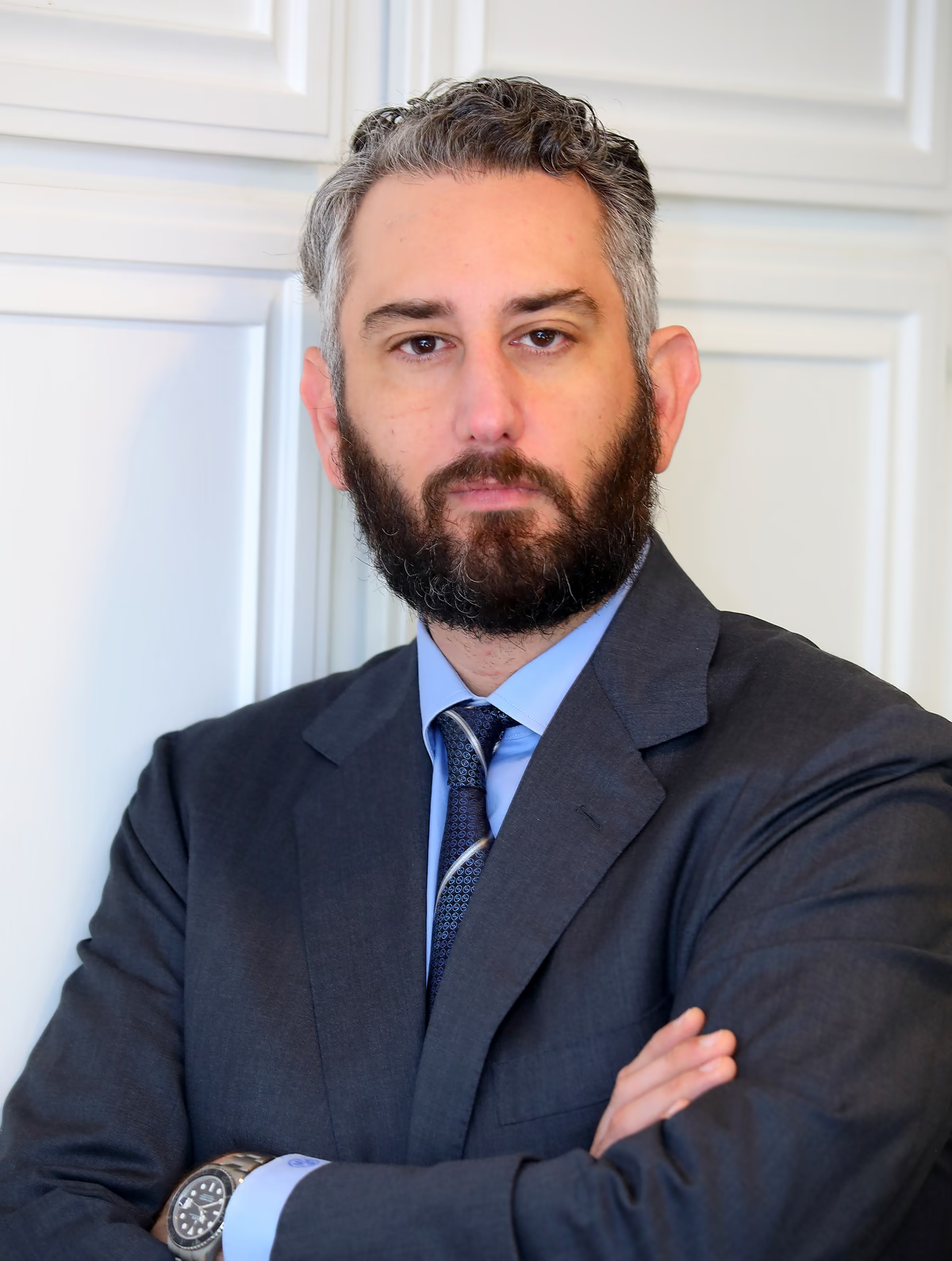
CA Bar #286995 · Admitted 2013
A street takeover can turn from chaos to tragedy in seconds. When there are injuries, families often have to deal with police reports, hospital records, videos, insurance questions, and grief all at the same time.
According to the Daily Bulletin, one man was killed and six other people were injured in a shooting during an illegal street takeover in Carson over the weekend. The article reported that the violence happened near Charles Willard Street and Harmon Avenue around 3 a.m. on Sunday, June 28, 2026, citing the Los Angeles County Sheriff's Department.
The public reporting describes a criminal investigation. It does not decide whether any person, business, property owner, public agency, event organizer, driver, or other party may have civil responsibility. Those questions depend on facts that may not be public yet.
But one thing is clear: after a chaotic roadway event, evidence can disappear fast.
Important: This article provides general information, not legal advice. Public reports do not establish fault or legal responsibility. Law Office of Arta Wildeboer does not represent anyone involved in this incident unless a written attorney-client agreement is signed.
Why Street Takeover Injury Evidence Can Disappear Quickly
Street takeovers often involve crowds, cars, phones, social media posts, nearby businesses, surveillance cameras, and fast-moving law-enforcement response.
That means important evidence may exist in many places, including:
- cellphone videos,
- livestreams and social media posts,
- nearby business cameras,
- warehouse or commercial-building cameras,
- dashcams,
- traffic cameras,
- 911 calls,
- sheriff or police incident reports,
- fire or ambulance records,
- hospital records,
- witness accounts,
- vehicle information,
- photos of the location, lighting, traffic control, and crowd conditions.
Some of that evidence may be deleted, overwritten, edited, or lost within days. Preserving it early matters.
Start With Medical Records and a Timeline
If you or a family member was injured, medical care comes first. After that, start building a timeline.
Save:
- ambulance, emergency-room, hospital, and clinic records,
- discharge papers and follow-up instructions,
- photos of visible injuries over time,
- medication records,
- mental-health symptoms after the event,
- work absence records,
- receipts for transportation, parking, prescriptions, medical equipment, caregiving, or replacement property,
- names of hospitals or providers involved,
- dates and times symptoms changed.
Do not rely on memory alone. A short written timeline can help connect the injury, treatment, missed work, and later symptoms.
Preserve Photos, Videos, and Social Posts
If it is safe and lawful, preserve what you already have. Do not trespass, confront anyone, or interfere with a criminal investigation.
Useful records may include:
- original videos, not just compressed reposts,
- screenshots showing account names, dates, and captions,
- direct links to posts before they disappear,
- names or handles of people who posted footage,
- photos of the intersection, roadway, lighting, commercial buildings, parking areas, skid marks, debris, shell casings only if already photographed safely, and damaged property,
- messages from witnesses or friends who were present,
- news alerts or public agency updates.
If someone sends you video, save the original file if possible. Metadata can matter.
What Legal Questions May Need Investigation?
A street takeover injury may raise several questions. Asking them does not mean responsibility has already been established.
An investigation may need to ask:
- Who caused the injury or death?
- Were vehicles involved before or after the shooting?
- Were there identifiable organizers, promoters, drivers, or participants?
- Did any business, lot, or property owner have relevant camera footage?
- Was the event connected to a recurring location or prior incidents?
- Were traffic control, lighting, barriers, or road conditions relevant?
- Did any insurance policy apply, including auto, premises, commercial, or homeowner coverage?
- Did any public agency receive prior warnings or complaints about the location?
- What did law enforcement, fire, ambulance, and hospital records document?
The criminal case and a civil injury claim are different. A criminal prosecution focuses on punishment. A civil claim focuses on injury, responsibility, insurance, damages, and compensation for harm, if the evidence supports it.
Families Should Be Careful With Early Statements
After a public incident, people may be contacted by police, insurers, reporters, social media accounts, or strangers asking for footage.
Be truthful, but do not guess. Before signing releases, giving broad authorizations, posting detailed public statements, or sending original evidence to someone you do not know, consider getting legal guidance.
Families should also avoid arguing online about fault. Public comments can be screenshotted and used later.
Source
This post is based on the Daily Bulletin report: 1 killed, 6 injured in shooting at illegal street takeover in Carson. Public reports can change, and later investigation may clarify facts not available at the time of publication.
Bottom Line
After a street takeover injury, the first priority is medical care and safety. The second is preserving the record before videos disappear, witnesses scatter, and memories fade.
Save medical records, photos, original videos, social posts, witness information, police or sheriff records, hospital documents, receipts, and a written timeline.
Law Office of Arta Wildeboer helps injured people and families in Los Angeles County evaluate serious injury and wrongful-death questions, including evidence preservation after chaotic public incidents. If you or someone in your family was hurt, contact Law Office of Arta Wildeboer for a free consultation about your specific situation.
Attorney Advertising. This article is for general informational purposes only and does not constitute legal advice. Reading this content does not create an attorney-client relationship. Laws change frequently — consult a qualified attorney about your specific situation.