Hit by a Car Outside a California Restaurant? Evidence Victims and Families Should Save
After a reported Simi Valley crash outside an Urbane Cafe left a pedestrian dead and others hurt, families should know what evidence to preserve after a restaurant or shopping-center crash.
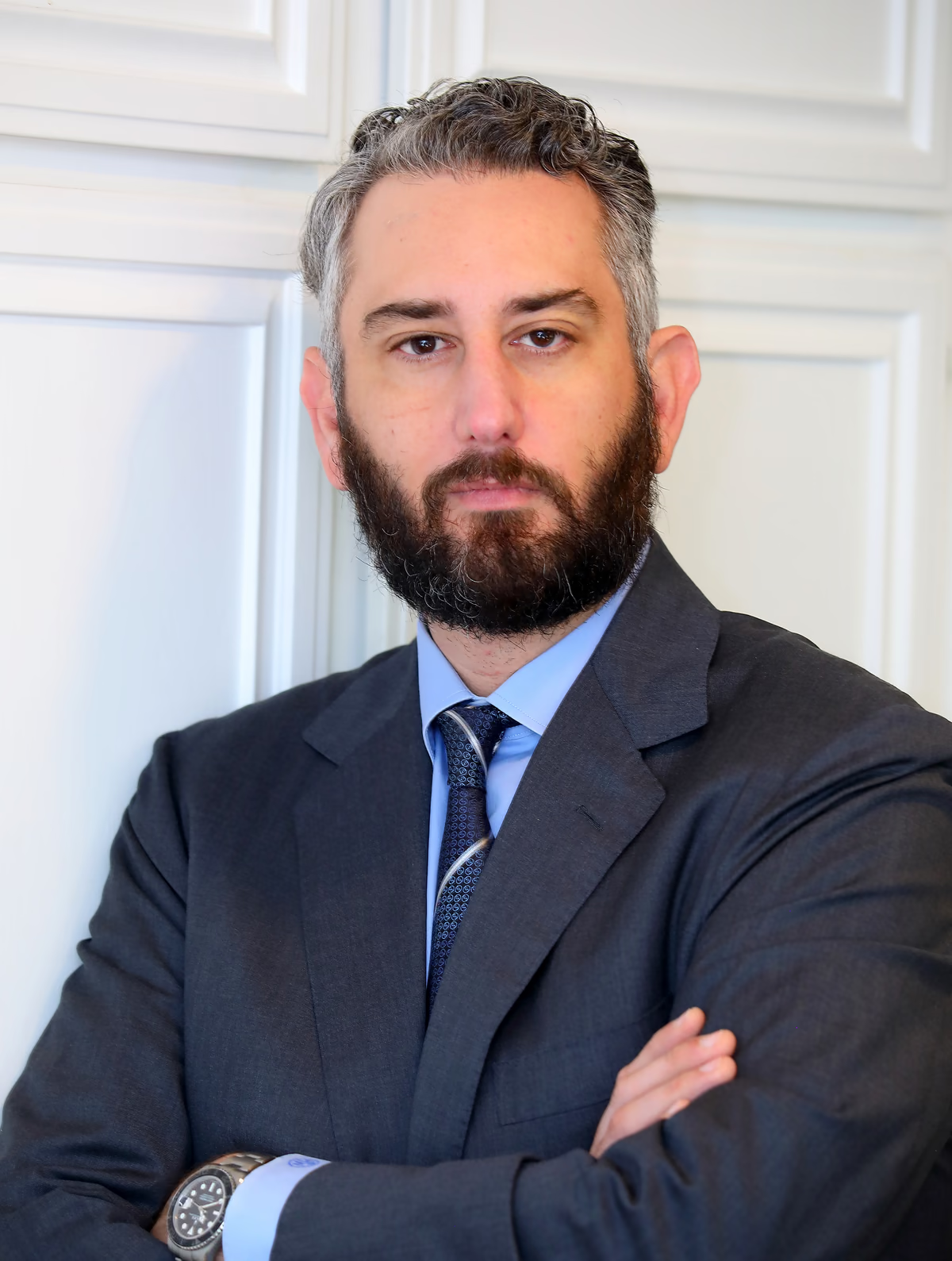
CA Bar #286995 · Admitted 2013
A serious crash outside a restaurant or shopping center can raise questions that go far beyond the first police report. Families may need to understand what happened, what evidence exists, and whether the location, vehicle, driver, property layout, or insurance coverage may matter.
According to ABC7 Los Angeles, a 79-year-old woman was killed after being struck by a Tesla outside an Urbane Cafe in Simi Valley on Monday afternoon, June 29, 2026. ABC7 reported that the crash happened around 2:30 p.m. in a shopping-center parking lot near Tierra Rejada Road and Madera Road, where the vehicle allegedly went over a sidewalk, struck the pedestrian, and crashed into the restaurant area.
ABC7 reported that investigators were still working to determine the cause, including whether speed, mechanical failure, or impairment may have played a role. Early reporting does not establish legal responsibility.
But after a crash involving a pedestrian, sidewalk, storefront, or restaurant patio, evidence can disappear quickly.
Important: This article provides general information, not legal advice. Public reports do not establish fault or legal responsibility. Law Office of Arta Wildeboer does not represent anyone involved in this incident unless a written attorney-client agreement is signed.
Why Restaurant and Shopping-Center Crash Evidence Matters
A crash outside a restaurant may involve more evidence sources than a typical roadway collision.
Depending on the facts, important records may include:
- restaurant surveillance video,
- shopping-center security footage,
- Target or nearby-store cameras,
- dashcam or vehicle camera data,
- witness statements from diners, employees, and shoppers,
- photos of tables, chairs, glass, debris, curbs, sidewalks, drive aisles, parking stalls, and traffic markings,
- police and fire department records,
- ambulance and emergency-room records,
- vehicle inspection records,
- tow-yard and repair records,
- insurance communications,
- prior incident or complaint records involving the same parking area.
Many camera systems overwrite footage in days or weeks. Physical conditions can also change fast: broken glass is cleaned, chairs are moved, damaged areas are repaired, and vehicles are towed or inspected.
What Families Should Preserve First
If someone is seriously injured or killed, safety and medical care come first. After that, families should begin preserving the record.
Useful evidence may include:
- the crash report number and responding agency information,
- the names and contact information of witnesses,
- photos or video from the scene,
- screenshots of public reports, store posts, or agency updates,
- medical records, discharge papers, imaging, prescriptions, and follow-up instructions,
- photos of visible injuries over time,
- receipts for transportation, caregiving, funeral-related costs, damaged property, or other crash-related expenses,
- a written timeline of what the family learns and when,
- names of stores, restaurants, property managers, security companies, or insurers that contact the family.
Do not trespass, confront people, or interfere with a police investigation to get evidence. But do write down possible camera locations quickly so preservation requests can be sent before footage disappears.
Legal Questions a Sidewalk or Storefront Crash May Raise
Every crash depends on the facts. Asking legal questions does not mean responsibility has already been established for any person or company.
A careful investigation may need to ask:
- What caused the vehicle to leave the drive aisle or roadway?
- Was driver speed, distraction, impairment, medical emergency, or pedal error involved?
- Was there any mechanical issue or vehicle malfunction?
- Were the parking-lot layout, curb design, traffic flow, visibility, or barriers relevant?
- Did the property owner, tenant, restaurant, shopping center, or security provider have relevant camera footage?
- Were there prior similar incidents, complaints, or known hazards at the same location?
- What did police, paramedics, firefighters, witnesses, and nearby businesses document?
- Which insurance policies may apply?
The answer may involve driver conduct, vehicle evidence, property evidence, surveillance footage, and medical records. That is why early preservation matters.
Be Careful With Insurance Calls and Early Releases
After a serious pedestrian crash, insurers may contact victims or families quickly. Be truthful, but do not guess.
Before giving a recorded statement, signing a broad medical authorization, accepting early payment, or signing a release, families should understand what the document does. In a serious injury or wrongful-death situation, the full picture may not be clear for days, weeks, or longer.
Families should also be careful about public posts. Online comments about fault, injuries, or what happened can be screenshotted and used later.
Source
This post is based on ABC7 Los Angeles reporting: 79-year-old woman struck, killed by Tesla outside Simi Valley restaurant. Public reports can change, and later investigation may clarify facts not available at the time of publication.
Bottom Line
After a pedestrian is struck outside a restaurant or shopping center, the first priority is medical care and family safety. The second is preserving evidence before cameras overwrite, witnesses leave, and physical conditions change.
Save photos, videos, medical records, witness information, insurance letters, receipts, agency reports, and a written timeline. Identify possible surveillance sources early.
Law Office of Arta Wildeboer helps injured people and families in Southern California evaluate serious pedestrian crashes, unsafe-property questions, insurance issues, and evidence-preservation steps. If you or someone in your family was hurt, contact Law Office of Arta Wildeboer for a free consultation about your specific situation.
Call or text (562) 608-8887 or contact Law Office of Arta Wildeboer online for a free consultation.
Se habla español. Farsi assistance is also available.
Past results do not promise any outcome, and contacting the firm does not create an attorney-client relationship unless a written agreement is signed.
Attorney Advertising. This article is for general informational purposes only and does not constitute legal advice. Reading this content does not create an attorney-client relationship. Laws change frequently — consult a qualified attorney about your specific situation.