After a Westlake Minivan Entrapment, What Evidence Should Injured People Preserve?
LAFD reported that one patient was trapped beneath a minivan in Westlake and transported to a hospital. After a serious Los Angeles crash, evidence can disappear quickly.
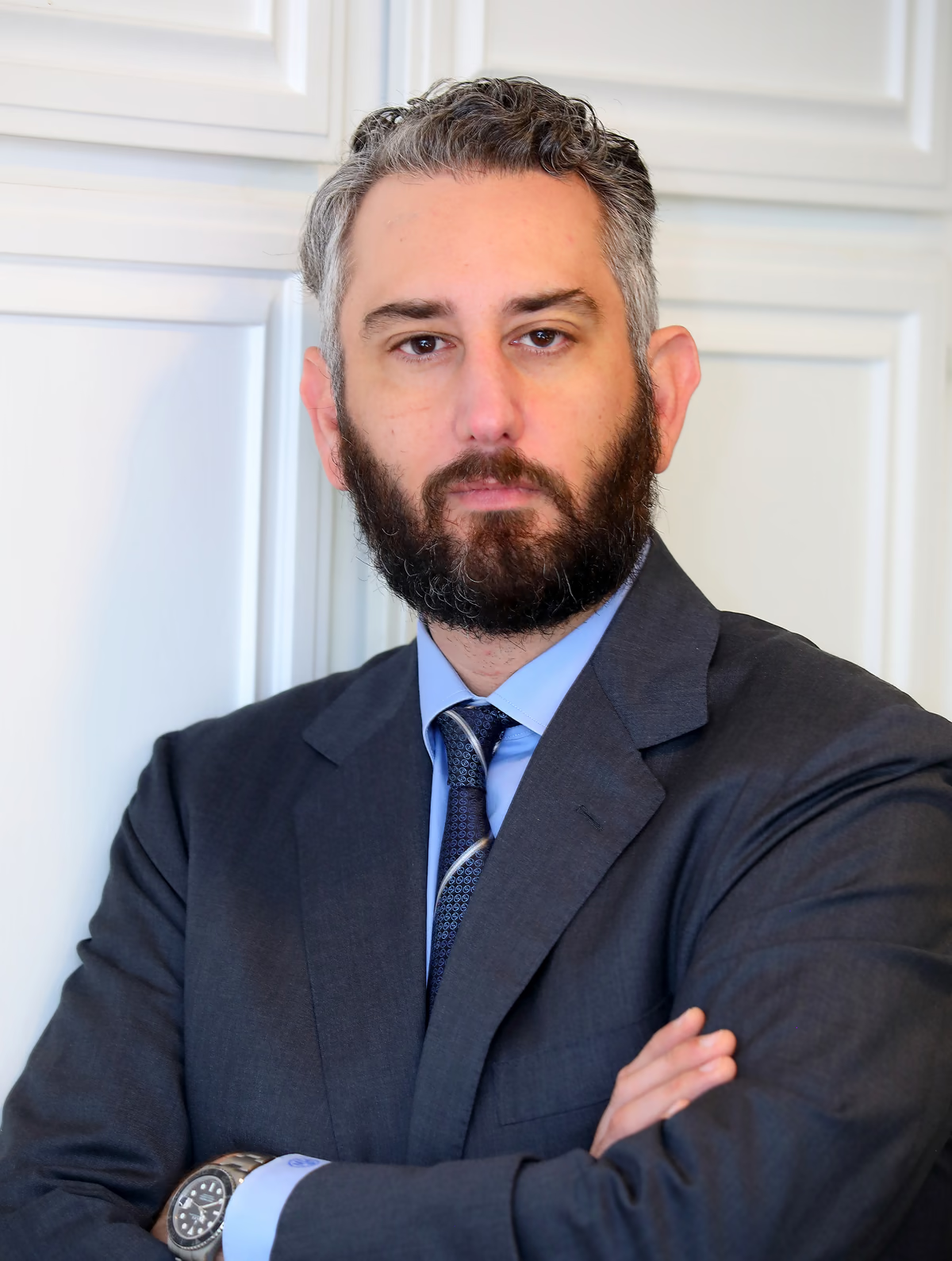
CA Bar #286995 · Admitted 2013
The Los Angeles Fire Department reported a serious traffic incident in Westlake on Saturday, June 27, 2026, involving one patient trapped beneath a minivan.
According to LAFD Alert INC#1223, firefighters responded at about 5:25 p.m. to 2130 W. 7th Street. LAFD reported that firefighters coordinated to lift the vehicle, free the patient, and that LAFD paramedics would transport the patient to a nearby hospital. LADOT was requested for traffic control, and LAFD referred law-enforcement details to LAPD incident INC#3158.
Early public reports can change. The LAFD alert does not establish how the incident happened or who, if anyone, may be legally responsible.
But for an injured person or family, the practical lesson is immediate: after a serious crash, evidence can vanish fast.
Important: This article provides general information, not legal advice. Public reports do not establish fault or legal responsibility. Every crash depends on the facts, evidence, injuries, insurance coverage, and investigation. Law Office of Arta Wildeboer does not represent anyone involved in this incident unless separately confirmed in a signed agreement.
Why Entrapment Crash Evidence Matters
A crash involving a person trapped under or near a vehicle can raise urgent questions:
- Was the injured person a pedestrian, passenger, driver, cyclist, scooter rider, worker, or bystander?
- What was the minivan doing before impact?
- Were there witnesses, cameras, rideshare vehicles, delivery vehicles, or nearby businesses with footage?
- Were lighting, traffic control, sight lines, road design, or parking conditions relevant?
- Did another vehicle contribute to the incident?
- Was the vehicle inspected before it was moved, repaired, or released?
- What did emergency responders document?
Those questions are not accusations. They are investigation questions. The answers may depend on records that are easiest to preserve in the first hours and days.
Start With Medical Care and a Symptom Timeline
Medical care comes first. After a serious crash, the full injury picture may not be clear at the scene.
Injured people and families should save:
- emergency-room and ambulance records,
- hospital discharge papers,
- imaging and test results,
- follow-up appointment records,
- medication lists,
- physical therapy or medical-provider referrals,
- photos of visible injuries over time,
- notes about pain, dizziness, headaches, numbness, sleep disruption, mobility problems, anxiety, or missed activities,
- work absence records,
- medical bills and insurance explanations of benefits,
- receipts for transportation, medical equipment, prescriptions, or caregiving help.
A short daily note can help, especially when symptoms change after the adrenaline wears off.
Preserve Scene Evidence Before It Changes
Crash scenes do not stay frozen. Vehicles are towed. Debris is cleared. Skid marks fade. Businesses overwrite video. Witnesses leave. Road work, lighting, signs, and traffic control can change.
If it is safe and lawful to do so, preserve:
- photos of the crash location from multiple angles,
- photos of crosswalks, curbs, parking lanes, driveways, signs, traffic signals, and lighting,
- photos of debris, tire marks, broken parts, damaged property, clothing, shoes, phones, bags, bikes, or scooters,
- screenshots of public LAFD, LAPD, or traffic reports,
- names and contact information for witnesses,
- nearby camera locations,
- the tow yard or storage location for any involved vehicle,
- repair estimates, vehicle photos, and insurance communications.
Do not trespass or confront anyone to get footage. But it can help to identify possible camera sources quickly so a preservation request can be sent before video disappears.
Camera Sources Can Be the Case
In dense Los Angeles neighborhoods like Westlake, possible video sources may include:
- storefronts,
- apartment buildings,
- parking lots,
- bus stops or transit areas,
- dashcams,
- delivery vehicles,
- rideshare vehicles,
- traffic or city cameras,
- nearby residences.
Many surveillance systems overwrite footage in days or weeks. In a serious injury case, a lawyer may be able to send preservation letters to businesses, property owners, public agencies, or insurers.
Be Careful With Insurance Calls
Insurance companies may call before the injured person or family understands the full medical picture.
Be truthful. Do not guess.
Before giving a recorded statement, signing a broad medical authorization, accepting early payment, or signing a release, injured people should understand what the document does. A crash involving hospitalization, entrapment, or possible long-term injury may require more investigation before anyone can fairly evaluate the claim.
What Legal Questions May Matter?
Depending on the facts, a serious vehicle injury may require investigation into:
- driver conduct,
- pedestrian or roadway conditions,
- vehicle ownership and insurance,
- employer or commercial vehicle involvement,
- rideshare, delivery, or work-related driving,
- traffic-control or visibility issues,
- surveillance footage,
- emergency-response records,
- medical causation and future care needs.
The point is not to assume fault. The point is to preserve the information needed to answer the question later.
Sources
This post is based on the Los Angeles Fire Department alert for Traffic with Person Trapped 06/27/2026 INC#1223. Public reports can be updated, and later investigation may clarify facts not available at the time of publication.
The Bottom Line
After a serious Los Angeles crash involving entrapment, medical care comes first. Evidence preservation should follow as soon as it is safe.
Save medical records, photos, damaged items, witness information, camera locations, traffic reports, insurance communications, and a written timeline. Do not assume the police report or insurance file will capture everything that matters.
Law Office of Arta Wildeboer helps injured people and families in Los Angeles County evaluate serious crash claims, insurance issues, and evidence-preservation steps. If you or someone in your family was hurt in a serious vehicle crash, contact Law Office of Arta Wildeboer for a free consultation.
Call or text (562) 608-8887 or contact Law Office of Arta Wildeboer online for a free consultation.
Se habla español. Farsi assistance is also available.
Past results do not promise any outcome, and contacting the firm does not create an attorney-client relationship unless a written agreement is signed.
Attorney Advertising. This article is for general informational purposes only and does not constitute legal advice. Reading this content does not create an attorney-client relationship. Laws change frequently — consult a qualified attorney about your specific situation.